

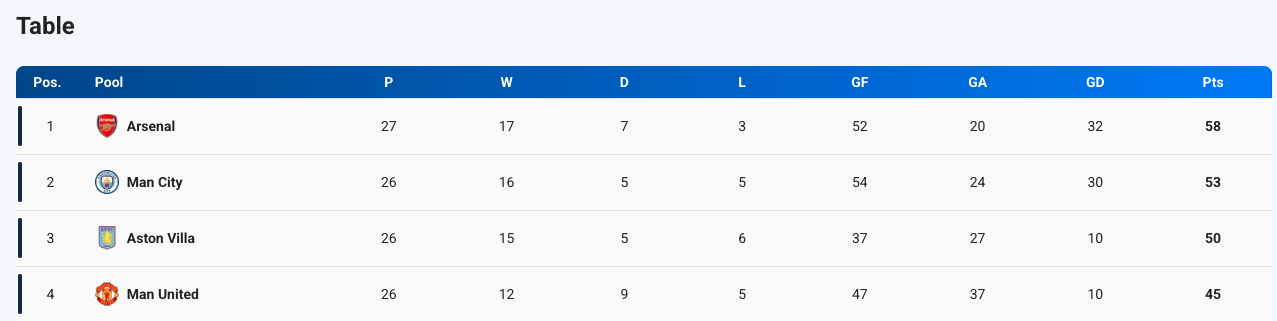
Arsenal looked to be cruising when they went two goals clear at Molineux, seemingly set to take full advantage in the title race.

But football has a way of punishing lapses, and Wolverhampton Wanderers, bottom of the table yet spirited, clawed their way back into contention. The atmosphere grew tense as the home side pressed forward, sensing vulnerability in a team that had appeared in control only minutes earlier.
Then came the moment that will dominate the headlines: Riccardo Calafiori, under pressure deep into stoppage time, inadvertently turned the ball into his own net. The 94th-minute own goal wasn’t just a cruel twist of fate—it was the kind of gut-punch that reshapes narratives.
From Arsenal’s perspective, it was a devastating error that transformed three points into one, undoing the hard work of the preceding 90 minutes.
For Calafiori, the incident will be replayed endlessly, every angle dissected in slow motion. Yet it’s important to see the bigger picture: own goals are rarely about individual incompetence, but rather the chaos of defending under extreme pressure.
He was in the right place to make a clearance, but in the wrong moment, the ball ricocheted disastrously. It’s a reminder of how thin the margins are at the elite level—one touch can swing the destiny of a match, or even a season.
In the broader context of the title race, this was more than just a draw. Arsenal squandered a golden chance to surge ahead, and the psychological impact of conceding so late, in such fashion, could linger.
For Wolves, it was a lifeline, proof that fight and persistence can yield reward even against superior opposition. For the neutral, Calafiori’s own goal encapsulated football’s drama: the unpredictability, the heartbreak, and the sheer theatre of a game where every second counts.